Kultur & Gesellschaft
It's Been a Minute Folgen
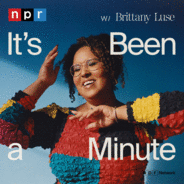
Want in on a secret? Your likes and dislikes didn't develop by accident. There are subtle and not-so-subtle forces around you, shaping what you think, how you act, and even who you think you are. Brittany Luse is here to break the spell and help you feel wiser in a society that makes things blurry.THE BEST POP CULTURE PODCAST AWARD WINNER AT THE 2025 SIGNAL AWARDSIt’s Been A Minute with Brittany Luse is the best podcast for understanding what’s going on in culture right now, and helps you consume it smarter. From how politics influences pop culture to how identity influences tech or health, Brittany makes the picture clearer for you every Monday, Wednesday, and Friday.It’s Been A Minute reaches millions of people every week. Join the community and conversation today.If you can't get enough, try It's Been a Minute Plus. Your subscription supports the show and unlocks a sponsor-free feed. Learn more at plus.npr.org/itsbeenaminute
Folgen von It's Been a Minute
-
Folge vom 20.03.2026Meet the billionaires who control your mediaWhat happens when tech billionaires control the media you consume?With the help of his father, Paramount CEO David Ellison's purchase of Warner Bros. Discovery has gained him a roster of franchises and networks, from Looney Tunes to CNN. But the sale hasn't come without serious concerns, from data privacy to the rising costs of streaming services to what this means for workers in the entertainment industry. Brittany is joined by Mandalit Del Barco, NPR culture correspondent, and David Folkenflik, NPR media correspondent, to cut through the corporate drama and figure out what this deal means for all of us.(0:00) Why Brittany thinks you should be interested in the Paramount/Warner Bros deal(4:12) How this deal will impact journalism and what you watch on TV(7:19) Who are the Ellisons? And what's their relationship to Trump?(11:49) Why cuts to the entertainment industry impact the entire country(16:45) Who really controls American culture: the people or the rich & powerful? Interested in more TV conversations? Check out these episodes: Sinners vs. One Battle After Another: who should win Best Picture?Melania Trump’s multi-million dollar “infomercial”Support Public Media. Join NPR Plus.Follow Brittany on Instagram: @bmluseFor handpicked podcast recommendations every week, subscribe to NPR’s Pod Club newsletter at npr.org/podclub.To manage podcast ad preferences, review the links below:See pcm.adswizz.com for information about our collection and use of personal data for sponsorship and to manage your podcast sponsorship preferences.NPR Privacy Policy
-
Folge vom 18.03.2026The unbearable fear of being cheated onIt's easier than ever to cheat and to catch a cheater, but is that a good thing?For example, there are apps and social media groups dedicated to outing a cheater. But what if that paranoia about cheating is actually hurting our relationships? And on top of that, definitions of "cheating" vary widely. How do you decide for yourself what really counts as cheating? And what's really fueling our fear of being cheated on?Brittany is joined by Kathryn Jezer-Morton, writer of the Brooding column from The Cut, and Shannon Keating, freelance culture journalist, to get to the bottom of why fear of infidelity haunts our culture and our dating lives.Want more about modern dating? Check out these episodes:The embarassing truth of dating menIs he a good guy? Or is he manipulating you?Support Public Media. Join NPR Plus.Follow Brittany on Instagram: @bmluseFor handpicked podcast recommendations every week, subscribe to NPR’s Pod Club newsletter at npr.org/podclub.To manage podcast ad preferences, review the links below:See pcm.adswizz.com for information about our collection and use of personal data for sponsorship and to manage your podcast sponsorship preferences.NPR Privacy Policy
-
Folge vom 17.03.2026The beauty industry has an Epstein problemThe Epstein Files have revealed social and financial relationships throughout the beauty industry - and a toxic veneration for youth. Is it time for the public to reckon with what the powerful tell us is and isn't "beautiful?" Host Brittany Luse wonders: can society let go of decades old obsession with youthfulness? Luckily, Jessica DeFino, reporter, critic, and author of the FLESH WORLD substack, joins the show to answer that question and unpack how we’ve made beauty our God.(0:00) How the beauty industry shows up in the Epstein Files(3:24) Why the language of "self-care" is hypocritical post-Epstein(6:06) The beauty industry's obsession with youth(11:55) The secular religion of beauty(19:59) America's Next Top Model & the internalization of beauty standards(24:30) Tyra Banks & the power you lose in pursuit of powerCorrection, March 19, 2026A previous version of this episode incorrectly said that the 1970s tagline “because innocence is sexier than you think” was used to promote Maybelline products. It was used in advertisements for Love’s Baby Soft products.Want more about beauty and power? Check out these IBAM episodes:"Looksmaxxing" is teaching men that pretty hurts.Peptides & the pursuit of the "perfect" bodyThe privilege of being "skinny"Support Public Media. Join NPR Plus.Follow Brittany on Instagram: @bmluseFor handpicked podcast recommendations every week, subscribe to NPR’s Pod Club newsletter at npr.org/podclub.To manage podcast ad preferences, review the links below:See pcm.adswizz.com for information about our collection and use of personal data for sponsorship and to manage your podcast sponsorship preferences.NPR Privacy Policy
-
Folge vom 16.03.2026Is tech making us too obsessed with our bodies?All this health tracking might not be actually very...healthy.There's a lot of evidence that health tracking can be good for us. Studies have shown that fitness trackers are effective at increasing physical activity, and can pretty accurately detect issues like arrhythmia. And now they're getting a promotional boost from some very influential people: Secretary of Health and Human Services Robert F. Kennedy Jr., and doctor and wellness influencer Casey Means – President Trump's nominee for surgeon general and founder of Levels Health, a company that analyzes data from continuous glucose monitors. But even as health wearables have benefits – how do they fit into the Make America Healthy Again vision for health? What does all this data really do for us – and who else could access it?Brittany is joined by Adam Clark Estes, senior technology correspondent at Vox, and Lindsay Gellman, a freelance journalist who reports on health and business, to get into it.Want more about modern health? Check out these episodes:Were Americans actually healthier in the past?The difference between losing weight & being "healthy" Exercise is more important than everSupport Public Media. Join NPR Plus.Follow Brittany on Instagram: @bmluseFor handpicked podcast recommendations every week, subscribe to NPR’s Pod Club newsletter at npr.org/podclub.To manage podcast ad preferences, review the links below:See pcm.adswizz.com for information about our collection and use of personal data for sponsorship and to manage your podcast sponsorship preferences.NPR Privacy Policy
